
ఇండెక్స్ ఫండ్స్ vs యాక్టివ్ ఫండ్స్: ఏది మంచిది? Returns, Risk & Cost పూర్తి గైడ్

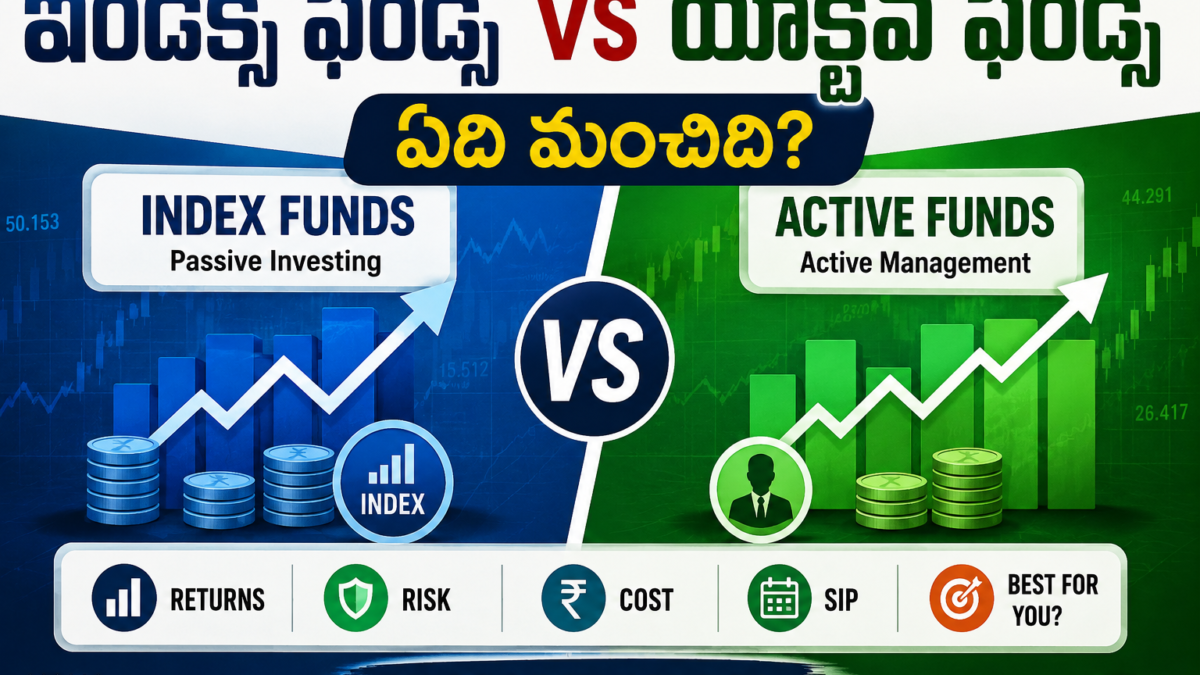
మీరు మ్యూచువల్ ఫండ్స్లో SIP ప్రారంభించాలని చూస్తున్నారా?
అయితే మీకు తప్పకుండా ఎదురయ్యే ప్రశ్న:
“ఇండెక్స్ ఫండ్లో పెట్టుబడి పెట్టాలా? యాక్టివ్ ఫండ్లో పెట్టుబడి పెట్టాలా?”
భారతదేశంలో passive investing, ముఖ్యంగా index funds, గత కొన్ని సంవత్సరాల్లో గణనీయంగా ప్రాచుర్యం పొందుతున్నాయి. AMFI-Crisil Factbook 2025 ప్రకారం, retail investorsలో passive fund assetsలో index funds వాటా FY2025లో 76.4%కి చేరింది; FY2020లో ఇది 4.4% మాత్రమే.
అదే సమయంలో, professional fund managers నిర్వహించే active mutual funds కూడా భారత mutual fund మార్కెట్లో ముఖ్యమైన భాగంగా కొనసాగుతున్నాయి.
అయితే Index Fund vs Active Fund — నిజంగా ఏది మంచిది?
దానికి ఒకే సమాధానం లేదు.
మీ investment goal, risk tolerance, time horizon, ఖర్చులు మరియు మీరు కోరుకునే investment approachపై ఆధారపడి ఎంపిక మారుతుంది.
ఈ ఆర్టికల్లో Index Funds మరియు Active Funds మధ్య తేడాలు, ఖర్చులు, returns, risk, SIPకు ఏది మంచిది, beginners ఏది ఎంచుకోవాలి మరియు fund ఎంచుకునేటప్పుడు ఏ అంశాలు చూడాలి అనే విషయాలను సులభమైన తెలుగులో తెలుసుకుందాం.
Index Fund అంటే ఏమిటి?
Index Fund అనేది ఒక నిర్దిష్ట stock market indexను అనుసరించే mutual fund.
ఉదాహరణకు:
- Nifty 50
- Nifty Next 50
- Nifty Midcap 150
- Sensex
వంటి indicesను track చేసే index funds ఉన్నాయి.
ఒక Nifty 50 Index Fund, Nifty 50లోని కంపెనీలను వాటి index weightsకు దగ్గరగా replicate చేయడానికి ప్రయత్నిస్తుంది.
అంటే fund manager ప్రధానంగా:
“ఏ stock కొనాలి?”
అని స్వయంగా నిర్ణయించరు.
బదులుగా:
“Benchmark indexను ఎంత దగ్గరగా track చేయాలి?”
అనేదే ప్రధాన లక్ష్యం.
SEBI Investor ప్రకారం, index mutual funds ఒక నిర్దిష్ట index పనితీరును replicate చేయడానికి ప్రయత్నిస్తాయి మరియు passive investment strategyని అనుసరిస్తాయి.
Active Fund అంటే ఏమిటి?
Active Fundలో fund manager మరియు investment team మార్కెట్ను పరిశీలించి ఏ stocks కొనాలి, ఏవి అమ్మాలి, portfolioలో ఎంత allocation ఉండాలి అనే నిర్ణయాలు తీసుకుంటారు.
AMFI ప్రకారం, active fundsలో fund manager underlying securitiesను Buy, Hold లేదా Sell చేయడంలో active role తీసుకుంటారు మరియు benchmark కంటే మెరుగైన returns లేదా alpha సాధించడానికి ప్రయత్నిస్తారు.
ఉదాహరణకు, ఒక active fund manager:
- కంపెనీ financial results
- valuation
- business growth
- management quality
- sector outlook
- economic conditions
వంటి అంశాలను పరిశీలించి portfolioను మార్చవచ్చు.
Index Funds vs Active Funds — ఒక చూపులో
| అంశం | Index Fund | Active Fund |
|---|---|---|
| Investment Style | Passive | Active |
| ప్రధాన లక్ష్యం | Indexను track చేయడం | Benchmarkను beat చేయడానికి ప్రయత్నించడం |
| Fund Manager Role | పరిమితం | ఎక్కువ |
| Stock Selection | Index ఆధారంగా | Fund manager నిర్ణయం |
| Portfolio Changes | సాధారణంగా తక్కువ | అవసరాన్ని బట్టి ఎక్కువ |
| Cost | సాధారణంగా తక్కువ | సాధారణంగా ఎక్కువ |
| Diversification | Indexపై ఆధారపడి ఉంటుంది | Fund strategyపై ఆధారపడి ఉంటుంది |
| Benchmarkను Beat చేయడం | లక్ష్యం కాదు | లక్ష్యం |
| Tracking Difference | ఉంటుంది | Benchmarkతో deviation ఉంటుంది |
| Research అవసరం | తక్కువ | ఎక్కువ |
Index Fund vs Active Fund: ప్రధాన తేడా ఏమిటి?
సులభంగా చెప్పాలంటే:
Index Fund
“Market ఎలా perform చేస్తే, దానికి దగ్గరగా నేను కూడా perform చేస్తాను.”
Active Fund
“Market కంటే మెరుగ్గా perform చేయడానికి ప్రయత్నిస్తాను.”
అయితే రెండో విధానంలో benchmarkను ప్రతి సంవత్సరం beat చేస్తారని guarantee లేదు.
Index Funds ఎందుకు తక్కువ ఖర్చుతో ఉంటాయి?
Index funds passive strategyని అనుసరిస్తాయి.
వాటికి సాధారణంగా:
- frequent stock selection
- extensive active research
- frequent portfolio changes
తక్కువగా అవసరం కావచ్చు.
అందువల్ల active fundsతో పోలిస్తే expense ratio సాధారణంగా తక్కువగా ఉండే అవకాశం ఉంది.
AMFI ప్రకారం, Total Expense Ratio (TER) అనేది mutual fund schemeను నిర్వహించడానికి అయ్యే వివిధ operating expensesను సూచిస్తుంది.
దీర్ఘకాల investmentలో cost కూడా చాలా ముఖ్యమైన అంశం.
Expense Ratio ఎందుకు ముఖ్యమైనది?
ఒక ఉదాహరణ చూద్దాం.
మీరు ₹10 లక్షలు పెట్టుబడి పెట్టారని అనుకుందాం.
రెండు fundsకి investment performance ఒకేలా ఉన్నా, ఒక fundలో costs ఎక్కువగా ఉంటే, దీర్ఘకాలంలో investorకి మిగిలే return తక్కువ కావచ్చు.
ఇక్కడ ముఖ్యమైన విషయం:
Expense ratio ఒక్కటే fund selection criterion కాదు.
Fund performance, risk, tracking difference, portfolio quality, consistency వంటి అంశాలను కూడా చూడాలి.
Index Fundలో Returns ఎలా వస్తాయి?
Index Fund లక్ష్యం benchmarkను beat చేయడం కాదు.
అది benchmarkను closely track చేయడానికి ప్రయత్నిస్తుంది.
ఉదాహరణకు:
Nifty 50 ఒక నిర్దిష్ట కాలంలో 12% return ఇచ్చిందని అనుకుందాం.
Index Fund కూడా దానికి దగ్గరగా return ఇవ్వడానికి ప్రయత్నిస్తుంది.
కానీ exact 12% రావాల్సిన అవసరం లేదు.
దీనికి కారణాలు:
- Expense ratio
- Transaction costs
- Cash holdings
- Rebalancing
- Tracking difference
వంటి అంశాలు.
SEBI కూడా index fund performance underlying indexతో closely alignedగా ఉంటుందని, అయితే costs కారణంగా తేడా రావచ్చని వివరిస్తుంది.
Tracking Error అంటే ఏమిటి?
Index Fund గురించి తెలుసుకునేటప్పుడు Tracking Error అనే పదం తరచుగా కనిపిస్తుంది.
సులభంగా చెప్పాలంటే:
Index return మరియు Index Fund return మధ్య ఉండే తేడాను అర్థం చేసుకోవడానికి Tracking Error ఉపయోగపడుతుంది.
ఒక indexను track చేసే fund benchmarkను ఎంత దగ్గరగా అనుసరిస్తుందో అర్థం చేసుకోవడానికి ఇది ఉపయోగపడుతుంది.
Index Fund ఎంచుకునేటప్పుడు expense ratio మాత్రమే కాకుండా tracking error మరియు tracking difference కూడా పరిశీలించడం మంచిది.
Active Funds ఎలా Benchmarkను Beat చేయడానికి ప్రయత్నిస్తాయి?
Active fund manager మార్కెట్లో అవకాశాలను గుర్తించి portfolioను మార్చవచ్చు.
ఉదాహరణకు:
ఒక sector భవిష్యత్తులో మంచి growth చూపిస్తుందని manager భావిస్తే allocation పెంచవచ్చు.
అదే సమయంలో valuation ఎక్కువగా ఉన్న stockలో allocation తగ్గించవచ్చు.
ఇలాంటి stock selection మరియు portfolio management ద్వారా benchmark కంటే ఎక్కువ returns సాధించడానికి ప్రయత్నిస్తారు.
కానీ:
Active management = guaranteed outperformance కాదు.
Active Funds నిజంగా Indexను Beat చేస్తాయా?
ఇది category, time period మరియు fundపై ఆధారపడి ఉంటుంది.
ఇక్కడ ఒక ముఖ్యమైన point ఉంది.
S&P Global యొక్క SPIVA India Year-End 2025 report ప్రకారం, Indian Equity Mid-/Small-Cap categoryలో కూడా substantial proportion of active funds benchmarkను underperform చేసిన periods ఉన్నాయి. అదే reportలో Indian ELSS fundsలో 69.2% 2025లో relevant indexను underperform చేశాయని పేర్కొంది; 3-, 5- మరియు 10-year periodsలో underperformance rates కూడా గణనీయంగా ఉన్నాయి.
అందువల్ల:
“Active Fund అంటే తప్పకుండా Index Fund కంటే ఎక్కువ return”
అనుకోవడం సరైంది కాదు.
అదే విధంగా:
“Index Fund ఎప్పుడూ Active Fund కంటే మంచిది”
అనడం కూడా సరైనది కాదు.
Category-by-categoryగా performanceను పరిశీలించాలి.
Large Capలో Index Fund vs Active Fund
Large Cap segmentలో broad-market index fundsకు ఒక ముఖ్యమైన advantage ఉంది:
Low cost + transparency + market exposure.
ఒక investor large-cap market exposure కోరుకుంటే, broad index fund ఒక simple option కావచ్చు.
Active large-cap fundలో fund manager benchmarkలోని stocks కంటే భిన్నమైన allocation తీసుకుని alpha generate చేయడానికి ప్రయత్నిస్తారు.
అందువల్ల comparisonలో:
- Long-term performance
- Expense ratio
- Benchmark
- Consistency
- Portfolio overlap
వంటి అంశాలు చూడాలి.
Mid Capలో Index Fund vs Active Fund
Mid Cap segmentలో active managementకు ఎక్కువ scope ఉండవచ్చని కొంతమంది investors భావిస్తారు.
ఎందుకంటే mid-cap universeలో companies మధ్య business quality, valuation మరియు growth potentialలో తేడాలు ఎక్కువగా ఉండవచ్చు.
అయితే active fund automatically better అని అర్థం కాదు.
ఇక్కడ కూడా:
Fund performance + risk + cost + consistency
అన్నింటినీ పరిశీలించాలి.
SIPకి Index Fund మంచిదా?
Long-term SIP investorsకు index fund ఒక simple option కావచ్చు.
ఉదాహరణకు:
నెలకు ₹5,000 SIP
అని అనుకుందాం.
మీరు దీర్ఘకాలం పెట్టుబడి కొనసాగిస్తే market growth మరియు compounding మీ corpus పెరగడానికి సహాయపడవచ్చు.
కానీ ఒక విషయం గుర్తుంచుకోవాలి:
SIPలో పెట్టుబడి పెట్టడం వల్ల market risk తొలగిపోదు.
Market పడిపోయినప్పుడు మీ SIP portfolio value కూడా పడిపోవచ్చు.
అందువల్ల SIPను short-term return strategyగా కాకుండా, మీ goal మరియు time horizonకు అనుగుణంగా చూడాలి.
Beginnersకి Index Fund మంచిదా?
చాలా మంది beginnersకు broad-market index fund ఒక simple investment approach కావచ్చు.
ఎందుకంటే:
- Structure సులభంగా అర్థమవుతుంది
- Diversification ఉంటుంది
- Cost సాధారణంగా తక్కువగా ఉంటుంది
- Stock selectionపై తక్కువ ఆధారపడాలి
- Long-term investingకి ఉపయోగపడవచ్చు
అయితే ప్రతి beginnerకి ఒకే fund సరిపోతుందని కాదు.
మీ risk profile మరియు financial goalను ముందుగా అర్థం చేసుకోవాలి.
Active Fund ఎవరికి సరిపోవచ్చు?
Active Fundను పరిశీలించవచ్చే investors:
- Fund manager strategyపై నమ్మకం ఉన్నవారు
- Benchmarkను beat చేసే potential కోరుకునేవారు
- Fund performanceను periodically review చేయగలిగేవారు
- Higher costsను అంగీకరించేవారు
- Long-term investment horizon ఉన్నవారు
అయితే ఒక సంవత్సరం లేదా రెండు సంవత్సరాల return చూసి active fund ఎంచుకోవడం మంచిది కాదు.
Index Fund ఎంచుకునేటప్పుడు 7 విషయాలు
1. ఏ Indexను Track చేస్తోంది?
Nifty 50నా?
Nifty Next 50నా?
Midcap indexనా?
ముందుగా underlying index తెలుసుకోండి.
2. Expense Ratio
Cost ఎంత తక్కువగా ఉందో పరిశీలించండి.
3. Tracking Difference
Benchmark return మరియు fund return మధ్య long-term differenceను చూడండి.
4. Tracking Error
Fund indexను ఎంత consistently track చేస్తుందో పరిశీలించండి.
5. Fund Size
Scheme size మరియు liquidity వంటి అంశాలను కూడా పరిగణించండి.
6. Fund House
AMC యొక్క track record మరియు fund management processను పరిశీలించండి.
7. Riskometer
SEBI ప్రకారం mutual fund schemes కు Riskometer ద్వారా risk level చూపించాలి. మీ risk toleranceతో అది సరిపోతుందో చూడండి.
Active Fund ఎంచుకునేటప్పుడు 8 విషయాలు
Active Fund ఎంపికలో:
- Long-term performance
- Benchmarkతో comparison
- Expense ratio
- Fund manager track record
- Portfolio concentration
- Investment philosophy
- Risk-adjusted performance
- Consistency
వంటి అంశాలను పరిశీలించండి.
Past performanceను మాత్రమే ఆధారంగా చేసుకుని fundను ఎంచుకోవద్దు.
Also Read: Emergency Fund అంటే ఏమిటి?
Direct Plan vs Regular Plan కూడా ముఖ్యమే
Index Fund లేదా Active Fund ఎంచుకున్నప్పుడు మరో ముఖ్యమైన నిర్ణయం:
Direct Plan లేదా Regular Plan?
SEBI Investor ప్రకారం Direct Plansలో intermediary commission ఉండదు కాబట్టి expense ratio సాధారణంగా Regular Plans కంటే తక్కువగా ఉంటుంది.
అయితే Direct Planలో investor స్వయంగా research చేసి investment decisions తీసుకోవాల్సి ఉంటుంది.
అందువల్ల:
Self-directed investor → Direct Plan గురించి పరిశీలించవచ్చు
Professional guidance అవసరమైతే → Regular Plan ద్వారా guidance పొందవచ్చు
అని broadly అర్థం చేసుకోవచ్చు.
Index Fund + Active Fund రెండూ పెట్టుకోవచ్చా?
అవును.
ఒక investor తన portfolioలో:
Core exposure → Index Fund
మరియు
Active allocation → Active Fund
వంటి strategy ఉపయోగించవచ్చు.
కానీ ఒకే categoryలో చాలా funds పెట్టుకోవడం వల్ల portfolio overlap పెరగవచ్చు.
ఉదాహరణకు మూడు large-cap funds పెట్టుకుని, వాటిలో ఉన్న stocks దాదాపు ఒకేలా ఉంటే diversification పెరిగినట్లు కనిపించినా, వాస్తవంగా overlap ఎక్కువగా ఉండవచ్చు.
అందుకే ప్రతి fund portfolioలో ఎందుకు ఉందో తెలుసుకోవాలి.
₹10,000 SIP: Index Fund లేదా Active Fund?
ఒక hypothetical example చూద్దాం.
మీరు నెలకు:
₹10,000 SIP
చేస్తున్నారని అనుకుందాం.
ఒక Index Fund మరియు ఒక Active Fund రెండూ దీర్ఘకాలంలో మంచి returns ఇస్తే, investor wealthపై:
- Return
- Expense ratio
- Investment period
- Compounding
- Tax
- Exit loads, if applicable
వంటి అంశాలు ప్రభావం చూపుతాయి.
ఇక్కడ ఒక ముఖ్యమైన point:
ఒక fund 12% return, మరొక fund 10% return ఇస్తుందని ముందుగానే ఊహించి investment decision తీసుకోవడం సరైంది కాదు.
Actual future returns guarantee చేయలేం.
అందుకే SIP calculatorలో assumed returnsతో scenarios తయారు చేసుకోవడం మంచిది కానీ వాటిని guaranteed outcomeగా చూడకూడదు.
Index Fund ఎప్పుడు మంచి ఎంపిక కావచ్చు?
మీరు:
- Long-term investor అయితే
- Simple investment strategy కోరుకుంటే
- Low-cost approach కోరుకుంటే
- Broad market exposure కావాలనుకుంటే
- Frequent fund switching చేయకూడదనుకుంటే
Index Fundను పరిశీలించవచ్చు.
Active Fund ఎప్పుడు పరిశీలించవచ్చు?
మీరు:
- Professional fund management కోరుకుంటే
- Benchmarkను beat చేసే potential కోసం చూస్తే
- Fund performanceను review చేయగలిగితే
- Portfolio strategyపై ఆసక్తి ఉంటే
- Higher expense ratio ఉన్నప్పటికీ potential alpha కోసం ప్రయత్నించాలనుకుంటే
Active Fundను పరిశీలించవచ్చు.
Index Fund vs Active Fund: ఎవరు గెలుస్తారు?
ఇది ఒక cricket matchలా simple answer ఇవ్వగల విషయం కాదు.
కొన్ని periodsలో active fund outperform చేయవచ్చు.
కొన్ని periodsలో index fund outperform చేయవచ్చు.
మరికొన్ని periodsలో రెండింటి మధ్య తేడా చాలా తక్కువగా ఉండవచ్చు.
అందుకే investment decision:
“ఎవరు గత సంవత్సరం ఎక్కువ return ఇచ్చారు?”
అనే ప్రశ్నపై కాకుండా:
“నా investment goalకు ఏ strategy సరిపోతుంది?”
అనే ప్రశ్నపై ఆధారపడాలి.
5 Common Mistakes Investors చేయకూడదు
Mistake 1: గత returns చూసి fund కొనడం
Past performance future returnsకు guarantee కాదు.
Mistake 2: Expense ratio మాత్రమే చూడడం
Low expense ratio ఉన్న fund తప్పకుండా best అని కాదు.
Mistake 3: చాలా funds కొనడం
ఎక్కువ funds = ఎక్కువ diversification అని అనుకోవడం తప్పు.
Mistake 4: Market fallలో SIP ఆపేయడం
మీ goal మరియు investment strategy మారకపోతే, short-term volatility ఆధారంగా impulsive decisions తీసుకోకండి.
Mistake 5: Riskometer పట్టించుకోకపోవడం
SEBI Riskometer మీ fund risk levelను అర్థం చేసుకోవడానికి ఉపయోగపడుతుంది. మీ risk appetiteకు సరిపోతుందో చూడండి.
2026లో Index Funds ఎందుకు ఎక్కువగా చర్చలో ఉన్నాయి?
Passive investing భారతదేశంలో క్రమంగా పెరుగుతోంది.
AMFI-Crisil 2025 data ప్రకారం retail passive AUMలో index funds వాటా FY2025లో 76.4%కి చేరింది. ఇది FY2020లో ఉన్న 4.4%తో పోలిస్తే భారీ మార్పు.
దీంతో investorsలో:
- Low-cost investing
- Index investing
- Long-term SIP
- Passive portfolio
- Benchmark investing
వంటి conceptsపై ఆసక్తి పెరుగుతోంది.
అయితే popularity పెరిగిందని ప్రతి index fundను blindly కొనడం కూడా సరైంది కాదు.
Index Fund vs Active Fund — Final Verdict
మీకు simple, transparent మరియు generally low-cost market exposure కావాలంటే Index Fund ఒక మంచి option కావచ్చు.
మీకు professional stock selection మరియు benchmarkను beat చేసే potential కావాలంటే Active Fundను పరిశీలించవచ్చు.
కానీ:
Index Fund = always best
లేదా
Active Fund = always best
అని చెప్పడం సరైంది కాదు.
మీరు fund ఎంచుకునేటప్పుడు:
Goal + Time Horizon + Risk + Cost + Performance + Portfolio
అన్నింటినీ కలిపి చూడాలి.
Frequently Asked Questions
1. Index Fund అంటే ఏమిటి?
ఒక నిర్దిష్ట market indexను replicate లేదా closely track చేయడానికి ప్రయత్నించే mutual fundను Index Fund అంటారు.
2. Active Fund అంటే ఏమిటి?
Fund manager stock selection మరియు portfolio decisions ద్వారా benchmarkను outperform చేయడానికి ప్రయత్నించే mutual fundను Active Fund అంటారు.
3. Index Fund Active Fund కంటే మంచిదా?
అన్ని సందర్భాల్లో కాదు. Investor goals, category, cost, performance మరియు riskపై ఆధారపడి ఉంటుంది.
4. Beginners Index Fundలో పెట్టుబడి పెట్టవచ్చా?
Simple, diversified మరియు low-cost approach కోరుకునే beginnersకు index fund ఒక ఎంపిక కావచ్చు.
5. SIPకి Active Fund లేదా Index Fund ఏది మంచిది?
రెండింటినీ SIP ద్వారా పెట్టుబడి చేయవచ్చు. ఏది సరిపోతుందో investor’s goals, risk tolerance మరియు investment horizonపై ఆధారపడి ఉంటుంది.
6. Index Fundsలో risk ఉందా?
అవును. Equity index funds market riskకు లోబడి ఉంటాయి. Market పడిపోతే fund value కూడా తగ్గవచ్చు.
7. Active Funds ఎప్పుడూ Indexను beat చేస్తాయా?
లేదు. Active funds benchmarkను beat చేయడానికి ప్రయత్నిస్తాయి కానీ outperformance guarantee కాదు.
8. Index Fundలో Tracking Error అంటే ఏమిటి?
Index మరియు index fund performance మధ్య ఉండే deviationను అర్థం చేసుకోవడానికి Tracking Error ఉపయోగిస్తారు.
9. Expense Ratio ఎందుకు ముఖ్యం?
Expense ratio fund నిర్వహణకు సంబంధించిన ఖర్చులను ప్రతిబింబిస్తుంది. దీర్ఘకాలంలో costs investor’s net returnsపై ప్రభావం చూపవచ్చు.
10. Index Fundలో పెట్టుబడి పెట్టేముందు ఏం చూడాలి?
Underlying index, expense ratio, tracking difference, tracking error, fund size, fund house మరియు Riskometer వంటి అంశాలను పరిశీలించండి.
ఒక చిన్న గుర్తుంచుకోవాల్సిన ఫార్ములా
Index Fund
Low Cost + Simplicity + Market Tracking
Active Fund
Fund Manager + Stock Selection + Outperformance ప్రయత్నం
మంచి Investment Decision
Goal + Risk + Time + Cost + Consistency
ముగింపు
ఇండెక్స్ ఫండ్ మరియు యాక్టివ్ ఫండ్ మధ్య పోటీని చూసి ఒకదాన్ని blindly ఎంచుకోవడం కంటే, మీకు ఏ investment approach సరిపోతుందో అర్థం చేసుకోవడం ముఖ్యం.
మీరు long-term wealth creation కోసం SIP చేస్తున్నట్లయితే, cost, diversification, risk, consistency మరియు investment horizon వంటి అంశాలను పరిగణనలోకి తీసుకోండి.
ముఖ్యంగా, mutual fundను ఎంచుకునే ముందు scheme documents, Riskometer, expense ratio, benchmark మరియు fund performanceను పరిశీలించండి.
పెట్టుబడుల్లో “ఏ fund ఎక్కువ return ఇచ్చింది?” అనే ప్రశ్న కంటే “నా goalకి ఏ fund/strategy సరిపోతుంది?” అనే ప్రశ్న చాలా ముఖ్యమైనది.